
Labour Market
The Jua Kali Sector's Quiet Expansion and Why It Matters for GDP
Kenya's informal artisan economy is growing faster than most official models capture — and that gap has real consequences for fiscal and labour policy.
180,000 New Workers — and a Measurement Problem
When the informal economy expands, official GDP figures may be the last to know.
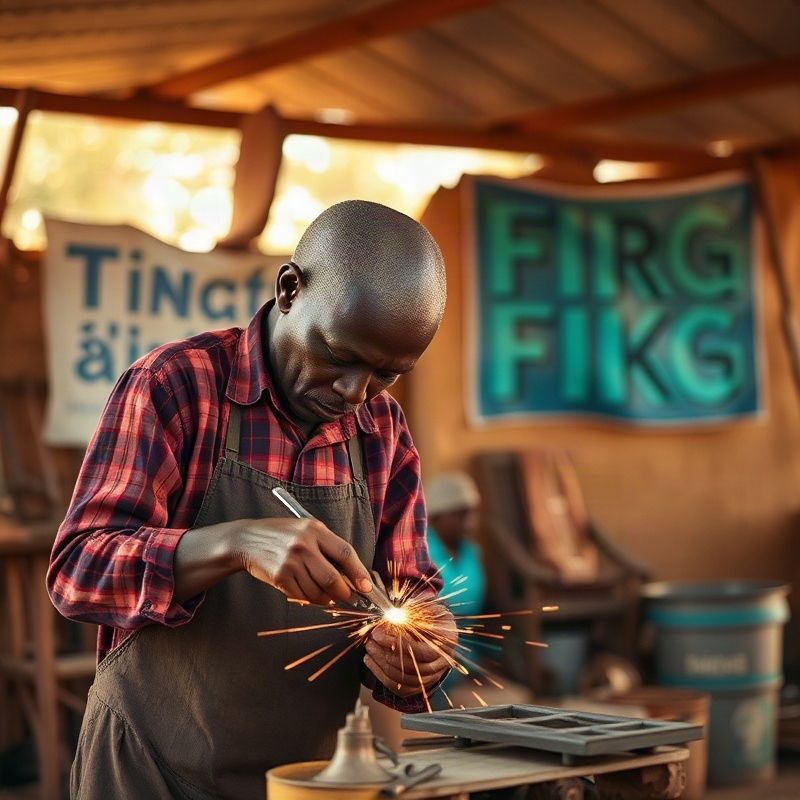
Kenya's jua kali sector — the broad informal economy of artisans, fabricators, tailors, mechanics, and micro-manufacturers who work predominantly outdoors or in improvised workshops — has expanded significantly since 2022. Estimates from the Kenya National Bureau of Statistics Integrated Household Budget Survey, cross-referenced with county-level business registration data, suggest that the sector added approximately 180,000 workers in the 18 months to mid-2024. That figure is itself an undercount: by definition, informal economic activity leaves partial administrative trails, and national accounts methodology for capturing informal value-added relies on benchmark surveys conducted every five years rather than quarterly. The implication is that Kenya's official GDP growth rate — 5.1 percent in the most recent full-year estimate — probably understates actual economic activity during periods of rapid informal-sector expansion. This is not a trivial observation. Tax revenue projections, social-protection budgets, and National Treasury borrowing decisions are all calibrated against the official GDP series. If the informal sector is growing faster than the accounts capture, the fiscal position may be marginally stronger than headline figures suggest — but only marginally, because jua kali workers typically fall below the income threshold for formal tax obligations and do not contribute to the NSSF or NHIF at scale. The more significant implication is for labour policy. A sector adding workers at this pace is providing a critical buffer against open unemployment — particularly for youth, who account for an estimated 60 percent of new jua kali entrants. Ignoring that buffer when designing formal employment programmes risks duplicating effort and misallocating public resources. Pandagpanda will return to this story when the next KNBS economic survey is published.